



This Pro Travel Guide shows how to plan better trips with less stress, lower costs, and more comfort. You will learn how to make better choices before you book, how to avoid common mistakes, and how to build a simple travel system that saves time, money, and energy.
Travel feels easier when the plan matches the purpose. That is the heart of a Pro Travel Guide. Instead of chasing random discounts or copying someone else’s itinerary, you can make choices that fit your schedule, budget, and personality. Good travel is not about doing everything. It is about doing the right things in the right order.
Many travelers assume that better trips require bigger spending. In reality, the most satisfying journeys often come from clarity, timing, and discipline. A traveller who thinks ahead can often enjoy more and spend less. That is why the smartest trips are usually built with intention, not impulse. A Pro Travel Guide helps you see the whole trip before you spend the first dollar.
When people search for how to travel smarter and cheaper, they are usually looking for practical habits, not theory. They want advice that works in real life, whether they are planning a short city break, a family holiday, or a longer international journey. This guide is designed around that need.
Why smart travel starts before booking
A Pro Travel Guide begins long before you choose a flight or hotel. It begins with the reason for the trip. Are you traveling to rest, explore, work, visit family, or celebrate a special moment? The clearer the purpose, the easier the rest of the decisions become. Purpose creates boundaries, and boundaries save money.
A clear purpose also helps you avoid waste. Some travelers overspend because they book features they do not need. Others underspend in the wrong places and end up uncomfortable. A balanced trip is created by understanding what truly matters. That may be location, silence, convenience, flexibility, or access to activities. Once those priorities are clear, the budget becomes easier to manage.
For new travelers, a complete pro travel guide for beginners should begin with this exact mindset. Before you compare prices, compare needs. Before you choose a route, decide what outcome you want. This simple habit reduces confusion and makes every later step more effective.
Build a realistic budget

A budget should support the trip, not punish it. One of the most useful budget-friendly travel planning tips is to divide the trip into clear categories: transport, accommodation, food, local movement, activities, insurance, and emergency money. Once each category has a rough limit, you can make better decisions without feeling lost.
Many people only think about the main booking cost, but total trip cost is what matters. A low hotel price can become expensive if it sits far from the places you want to visit. A low flight price can become expensive if baggage fees and transfers are high. A smart Pro Travel Guide always looks at the full picture.
A good budget is flexible enough to handle changes. It should not be so tight that one small surprise destroys it. Leave room for a meal you did not expect, a taxi ride you suddenly need, or an attraction you decide to visit on the spot. That buffer gives the trip breathing space and keeps stress under control.
| Category | What to Plan For | Why It Matters |
|---|---|---|
| Transport | Flights, trains, buses, and airport transfers | Often the biggest cost after lodging |
| Lodging | Hotel, guesthouse, apartment, resort | Affects comfort and location |
| Food | Breakfast, lunch, dinner, snacks | Easy to underestimate |
| Local movement | Taxi, rideshare, public transport | Impacts daily convenience |
| Activities | Entry tickets, tours, experiences | Creates the purpose of the trip |
| Insurance | Travel protection, medical coverage | Helps in emergencies |
| Backup fund | Unexpected expenses | Prevents panic spending |
Timing changes everything
Timing is one of the most powerful tools in any Pro Travel Guide. The same destination can feel completely different depending on the season, the day of the week, and the local calendar. Peak travel periods usually mean higher prices, busier attractions, and more pressure. Shoulder seasons often offer a better balance of value and comfort.
If your schedule allows flexibility, use it. Changing your travel dates by even a day or two can sometimes improve the total cost and the overall experience. This is one of the simplest smart ways to save money while traveling. It works because travel prices often shift around demand rather than actual quality.
Timing also affects your energy. A badly timed itinerary can make a beautiful trip feel exhausting. If you arrive tired, rush from place to place, and leave no space to recover, the experience suffers. A slower, more deliberate schedule often creates better memories because you have enough room to enjoy them.
Book with patience, not pressure
Booking is where many people make expensive mistakes. They see a reasonable price, panic that it will disappear, and lock in too early. A Pro Travel Guide teaches the opposite habit: pause, compare, and verify. The first acceptable option is not always the best one.
Compare the entire value of the booking, not only the visible price. Check cancellation rules, baggage conditions, cleaning fees, transfer time, and location convenience. A low rate can hide extra friction. A slightly higher price can sometimes save money if it reduces transport, downtime, or stress.
A practical Pro Travel Guide also recommends reading the fine print. Travel policies matter more than people expect. Refund terms, check-in rules, local taxes, and service fees can turn a good-looking deal into an annoying one. When you understand the details, you book with confidence instead of hope.
Pack light and pack intentionally
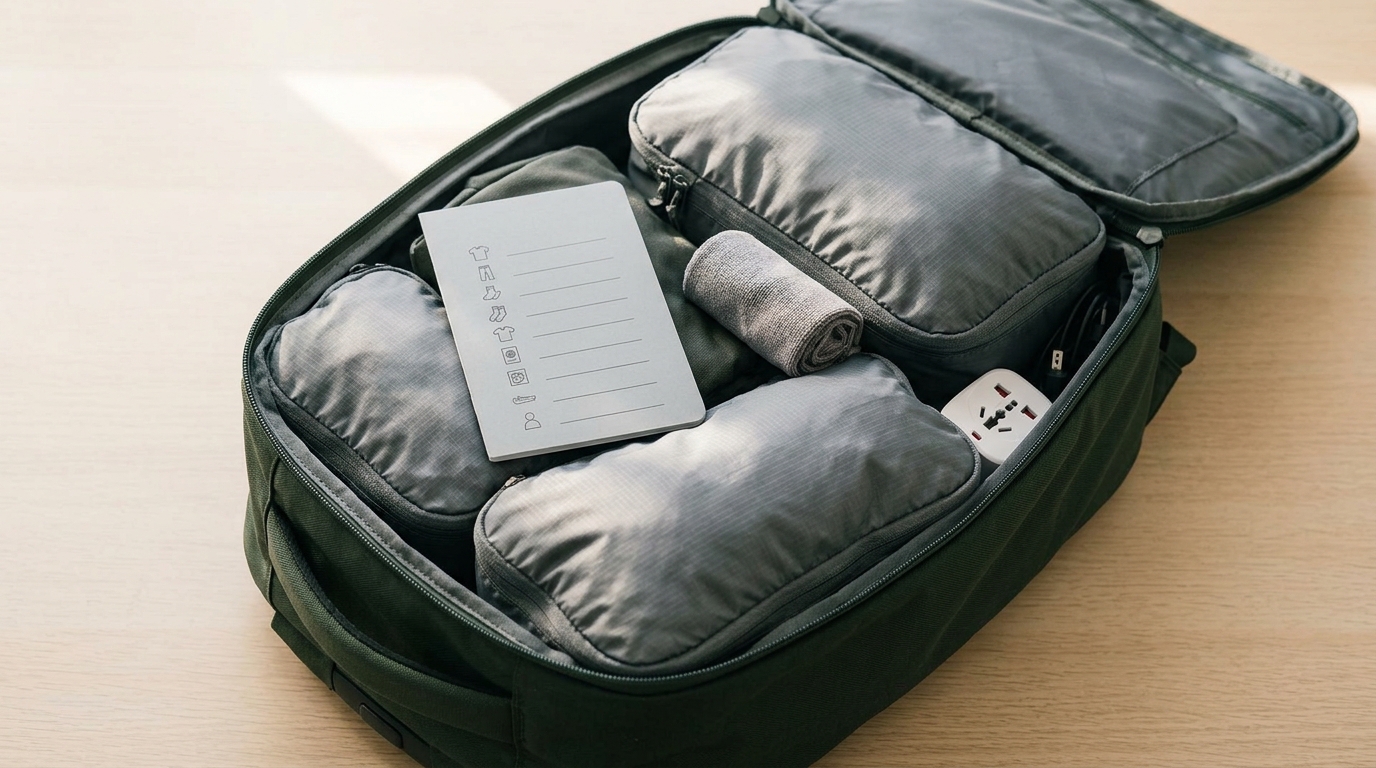
Packing is a skill, not a guessing game. The less you carry, the easier it is to move, organize, and adapt. A thoughtful packing system supports the trip from the moment you leave home. It also reduces the risk of paying for baggage you do not need.
A Pro Travel Guide should always treat packing as a comfort strategy. Choose items that can be mixed, layered, and reused. Bring clothes that match multiple settings. Avoid packing “just in case” items unless they are truly necessary. Most travelers pack too much because they fear being unprepared. In practice, that extra weight often becomes a burden.
The best method is a repeatable packing list. Keep one master list for documents, chargers, toiletries, clothes, medication, and destination-specific items. Review it before every trip and remove anything unlikely to be used. The result is a lighter bag and a calmer departure.
Spend where comfort really matters
Not every expense should be minimized. Some purchases improve the trip enough to justify the cost. A quieter hotel, a better location, a faster transfer, or a more flexible booking can save energy and reduce friction. A strong Pro Travel Guide helps you identify those high-value choices.
This is where human psychology matters. Travelers are often happier when they invest in the parts of the trip that affect mood and endurance. A good night of sleep can improve the next day more than a few extra savings ever could. That is why smart travel is not about being cheap in every direction. It is about being selective.
When you ask whether to upgrade, ask one question: will this improve the trip in a real, noticeable way? If the answer is yes, the cost may be worthwhile. If the answer is no, keep the money for something that matters more. That mindset creates balance.
Use routines to reduce stress
Travel stress often comes from uncertainty. The solution is not to control everything. The solution is to create a few reliable habits. Keep confirmations in one place. Leave time buffers between important steps. Know your next move before you finish the current one. These small routines make travel feel more stable.
One of the most helpful expert travel tips for stress-free journeys is to stop treating interruptions like emergencies. Delays, weather changes, long lines, and schedule shifts are normal. They are inconvenient, but they do not have to ruin the trip. A traveler who expects small disruptions stays calmer and solves problems faster.
A Pro Travel Guide also encourages backup planning. Keep digital copies of important documents. Save key addresses and contact numbers. Know where your bookings are stored. If something goes wrong, you recover more quickly when your information is easy to access.
Travel smarter through local choices
The best savings are often found after arrival. Local food, public transport, walkable neighbourhoods, and simple routines can make the trip cheaper without making it dull. A Pro Travel Guide does not stop at the airport. It continues into the daily choices that shape the trip experience.
Local movement is a good example. A central stay may cost more upfront but save money on taxis and wasted time. A quieter neighborhood may be cheaper but increase commuting costs. Think about the daily pattern, not just the nightly price. This logic is at the center of smart ways to save money while traveling.
Food is another area where travelers can save without sacrificing enjoyment. Mix restaurant meals with simple grocery purchases or local casual spots. Try the destination, but do not assume every meal must be expensive to feel memorable. The most satisfying trips often combine convenience with moderation.
A simple decision framework
Use this method when you are unsure about any travel choice:
- Does this support the trip’s purpose?
- Does this improve comfort, time, or value?
- Is there a lower-cost option with similar quality?
- Will this choice cause less stress later?
- Is this expense necessary, helpful, or optional?
A Pro Travel Guide becomes powerful when it turns choices into a repeatable process. You do not need to guess every time. You only need to ask the same intelligent questions before spending.
Common mistakes to avoid
Many travel problems are not dramatic. They are small mistakes repeated often. People forget to check policies, overpack, ignore transit time, or schedule too much in one day. They spend on the wrong things and then feel frustrated. A good Pro Travel Guide exists to prevent those predictable mistakes.
Another mistake is chasing the lowest number without reading the conditions. Cheap is not always valuable. A low price that creates inconvenience may be more expensive in practice. Better travel means understanding trade-offs and choosing wisely.
Do not overfill the itinerary either. Travel becomes tiring when every hour is booked. Leave space for rest, spontaneous discovery, and simple enjoyment. That balance matters more than people think because tired travelers make poorer decisions and enjoy less of what they paid for.
How beginners can start confidently
A Pro Travel Guide for beginners should focus on simplicity. Start with one trip, one budget, and one clear purpose. Avoid trying to master every travel hack at once. Build confidence through repetition. Every trip teaches you something useful for the next one.
Beginners often improve fastest when they keep a short post-trip note. What worked? What was stressful? What was worth the money? What felt unnecessary? These notes become a private playbook. Over time, you stop repeating mistakes and start creating better trips more naturally.
That process is one reason a Pro Travel Guide is so valuable. It does not just help with one journey. It improves the traveler. Once your habits get better, every new trip becomes easier to plan, cheaper to manage, and more enjoyable to live through.
Practical checklist before departure
Use this final review before you leave:
- Confirm bookings and times
- Check baggage rules and documents
- Save digital copies of key information
- Recheck weather and local conditions
- Pack essentials and remove extras
- Leave room in the budget for surprises
- Share your itinerary with someone trusted
A Pro Travel Guide should always end with a calm, useful checklist. It turns preparation into action and helps you leave without last-minute panic.
Conclusion
Travel is not only about reaching a destination. It is about how you feel while getting there and how well the experience fits your purpose. When you plan with clarity, budget with realism, pack with intention, and stay flexible, your trips become smoother and more rewarding. A good Pro Travel Guide helps you spend less on waste and more on what actually matters. It also reduces stress by making the process predictable and manageable. The more you use these habits, the more natural they become. That is how better travel is built: one smart decision at a time.
FAQ
1. What makes a Pro Travel Guide useful?
It gives you a repeatable way to plan, budget, pack, and travel with less stress and fewer mistakes.
2. How do I start traveling smarter and cheaper?
Begin with a clear purpose, then build a realistic budget, compare options carefully, and avoid unnecessary upgrades.
3. What is the biggest mistake new travelers make?
They often book too quickly without checking the full cost, rules, or convenience of the option they choose.
4. How can I reduce travel stress?
Keep your plans organized, leave buffer time, expect small disruptions, and store important information in more than one place.
5. Is it better to spend more on lodging or activities?
It depends on the trip, but a good rule is to spend more where comfort, location, or time savings create real value.
6. How can packing lighter help me?
It reduces baggage hassle, makes movement easier, and helps you stay more organized during the trip.
7. What should beginners focus on first?
Beginners should focus on purpose, budget, timing, and simple planning instead of trying to master everything at once.
8. How do I know if a deal is truly good?
Look beyond the headline price and compare fees, location, convenience, and cancellation terms.
9. Why does trip timing matter so much?
Timing affects cost, crowds, weather, and how relaxed the trip feels overall.
10. Can a small budget still create a great trip?
Yes. Smart decisions, flexible planning, and careful spending can make a small budget go a long way.
